Sunday, May 3, 2015

Warblers and Other Migrants at Ewing Park

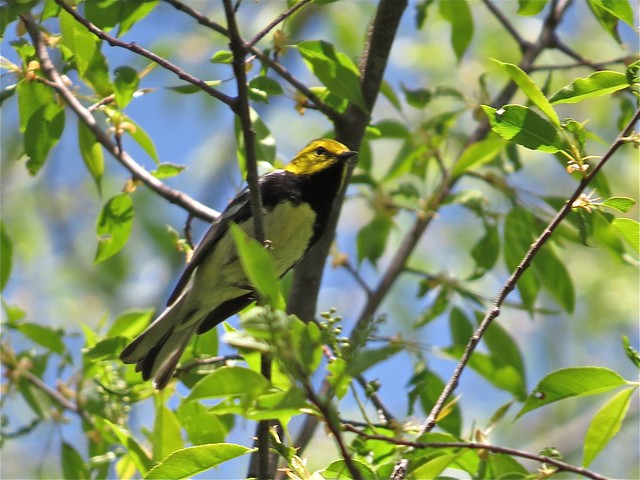
Black-throated Green Warbler at Ewing Park in McLean County, IL 01

Yesterday, I went to Ewing Park to see what migrants were passing through. I ran into Wes Kolb and Marty Greenham, and we birded together. I also saw Given Harper, who was leading a group from Illinois Wesleyan, Paula Aschim, and Tim Garvey.

I had ten warbler species: Blue-winged, Black-and-white, Orange-crowned, Nashville, Magnolia, Blackburnian, Yellow, Palm, Yellow-rumped, and Black-throated Green.

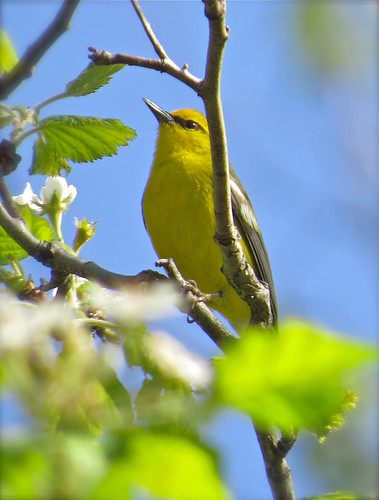
Here are a few shots of the Blue-winged. There were at least two Blue-winged Warblers, and they were both frequently singing.

Blue-winged Warbler at Ewing Park in McLean County, IL 06

Blue-winged Warbler at Ewing Park in McLean County, IL 04

Blue-winged Warbler at Ewing Park in McLean County, IL 08

The two Black-throated Green Warblers were also singing, when I photographed them.

Black-throated Green Warbler at Ewing Park in McLean County, IL 02

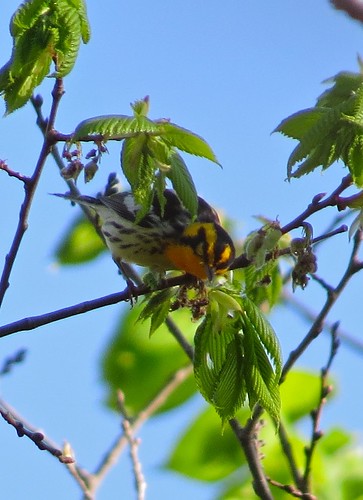
There were at least three Blackburnian Warblers.

Blackburnian Warbler at Ewing Park in McLean County, IL 01

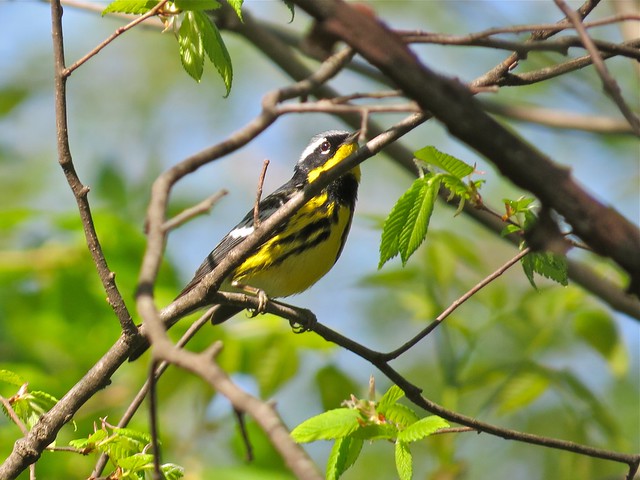
This Magnolia Warbler was a special treat.

Magnolia Warbler at Ewing Park in McLean County, IL

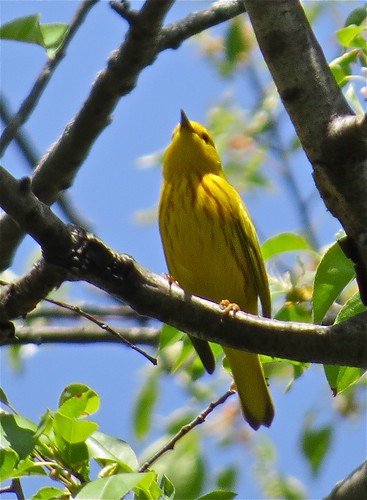
Here is a shot of the Yellow Warbler.

Yellow Warbler at Ewing Park in McLean County, IL

Wes saw a waterthrush. While Marty, Wes, and I were trying to relocate it, we saw this female Purple Finch drinking from the stream.

Purple Finch at Ewing Park in McLean County, IL 0w

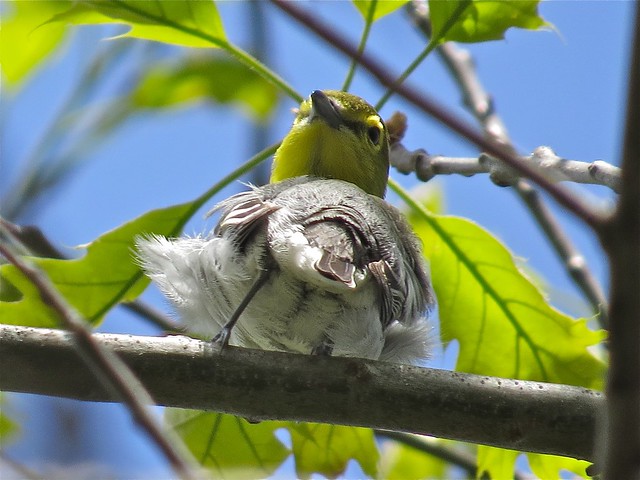
I also saw three vireo species: Blue-headed, Red-eyed, and Yellow-throated. Here are a couple of shots of the Yellow-throated Vireo.

Yellow-throated Vireo at Ewing Park in McLean County, IL 02

Yellow-throated Vireo at Ewing Park in McLean County, IL 04

Other migrants in the park included Wood Thrush, Brown Thrasher, Blue-gray Gnatcatcher, Indigo Bunting, and Baltimore Oriole.

Wednesday, April 22, 2015

Madera Canyon - Old Baldy Trail to Mt. Wrightson Peak

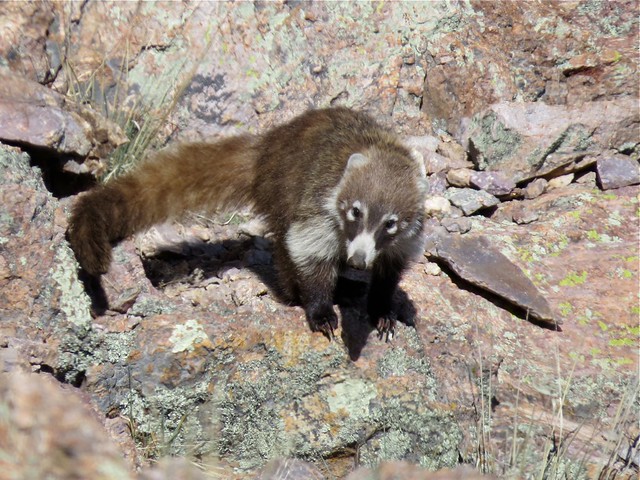
Coati Mundi (White-nosed Coati) on Mt. Wrightson in Madera Canyon in Santa Cruz County, AZ

On April 22, I hiked 10.8 miles to the top of Mt. Wrightson and back on the Old Baldy Trail at Madera Canyon with my brother-in-law Ben. My wife Carrie and mother-in-law Laura joined us most of the way to Josephine's Saddle before heading back.
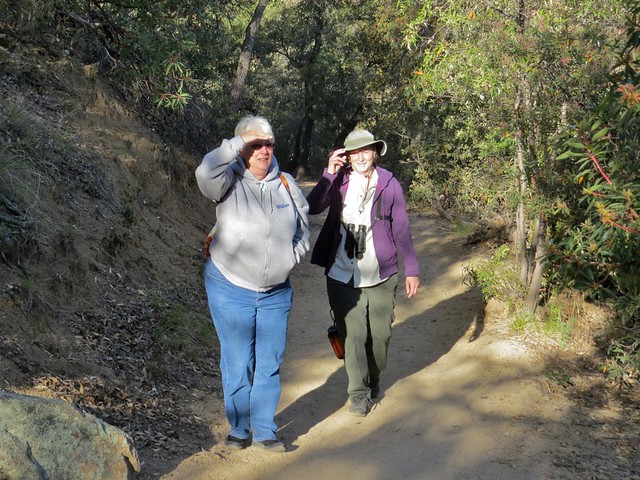
Laura and Carrie at Madera Canyon in Santa Cruz County, AZ

Although our main purpose was hiking, I had a total of 26 species. We hiked the 0.3 miles from the parking area, and turned left on the Old Baldy Trail. Not far up from this turn I heard an ELEGANT TROGON singing. Then two Elegant Trogons flew over Carrie and Laura, who were hiking behind me, and I heard a third singing to them ahead of me. I was able to see it, and it was a female. One of the other Trogons was calling to it, and it flew to the other side of the trail to join it.
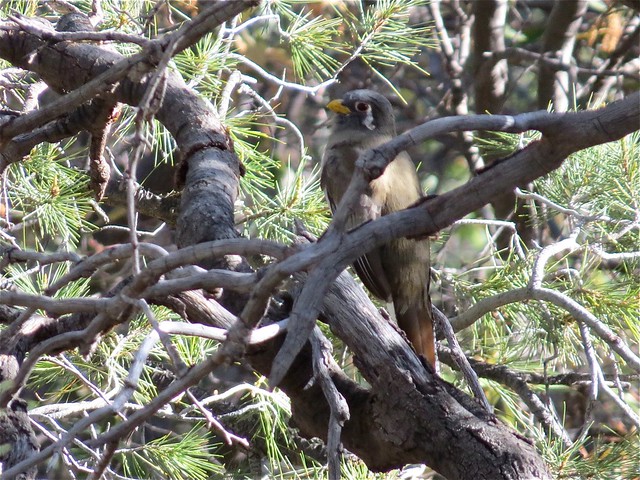
Elegant Trogon at Madera Canyon in Santa Cruz County, AZ 02

Next we had ARIZONA WOODPECKER, GRACE'S WARBLER, and BLACK-THROATED GRAY WARBLER.
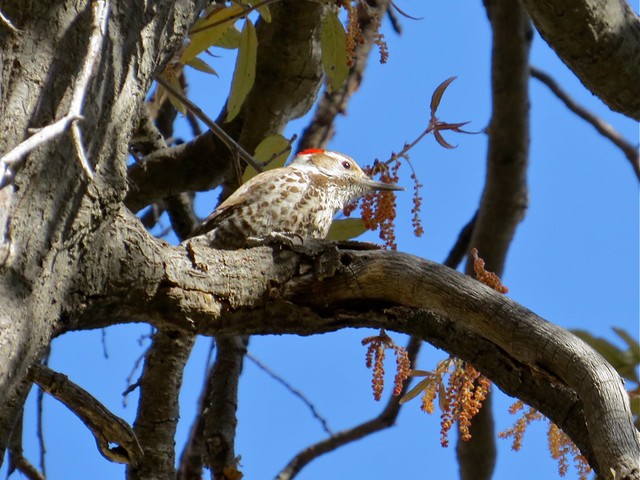
Arizona Woodpecker at Madera Canyon in Santa Cruz County, AZ

A little further up the trail, Ben saw a large bird flush. I walked ahead and saw a BAND-TAILED PIGEON sitting in a branch. I barely had a glimpse before it flushed again.

Other birds we were able to identify by song or sight before we reached Josephine's Saddle were MEXICAN JAY, PAINTED REDSTART, BRIDLED TITMOUSE, SPOTTED TOWHEE, YELLOW-EYED JUNCO, BLUE-GRAY GNATCATCHER, BUSHTIT, WHITE-BREASTED NUTHATCH, ACORN WOODPECKER, HERMIT THRUSH, NORTHERN FLICKER, HOUSE WREN, and GREATER PEWEE. I only heard the Greater Pewee, and it has a delightful song as does the Painted Redstart.
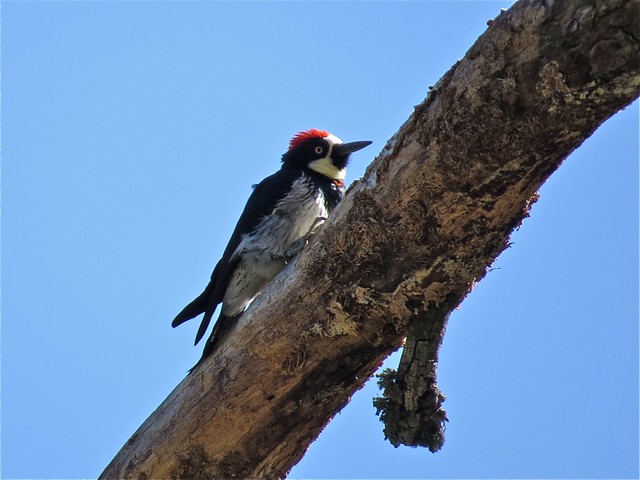
Acorn Woodpecker at Madera Canyon in Santa Cruz County, AZ

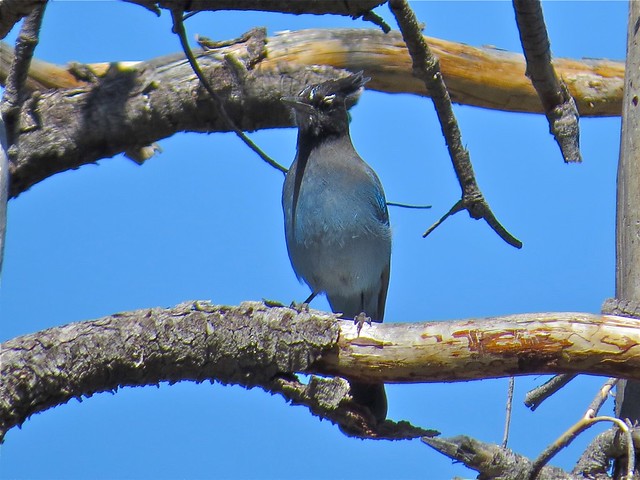
In the first 0.2 miles from the saddle up, we heard and then saw 3 STELLER'S JAYS, which I had missed the previous day at Mt. Lemmon.
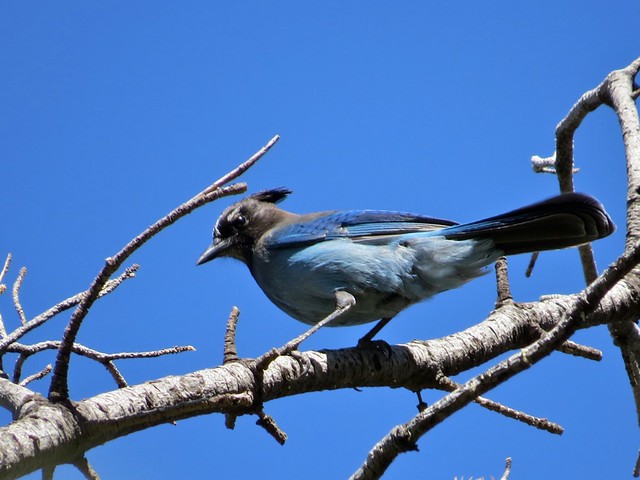
Steller's Jay at Madera Canyon in Santa Cruz County, AZ 01

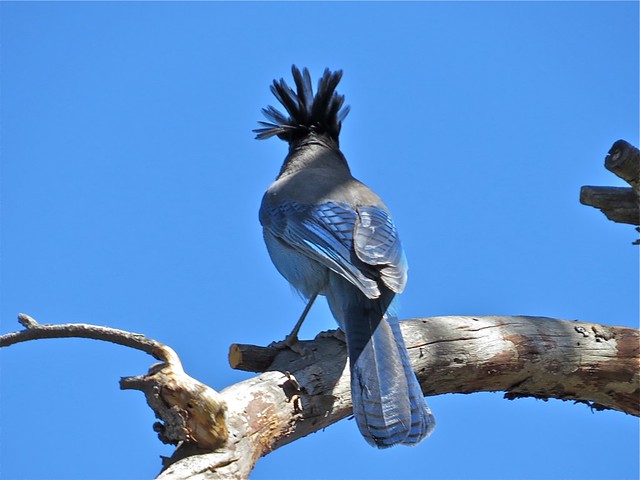
A little further up, we had some more Steller's Jays.
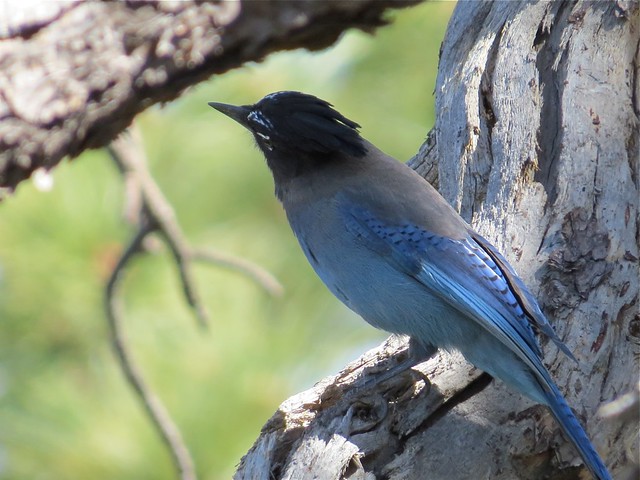
Steller's Jay at Madera Canyon in Santa Cruz County, AZ 03

Steller's Jay at Madera Canyon in Santa Cruz County, AZ 05

Steller's Jay at Madera Canyon in Santa Cruz County, AZ 07

Then we had a ZONE-TAILED HAWK fly over us. I heard several CANYON WRENS and saw two of them.
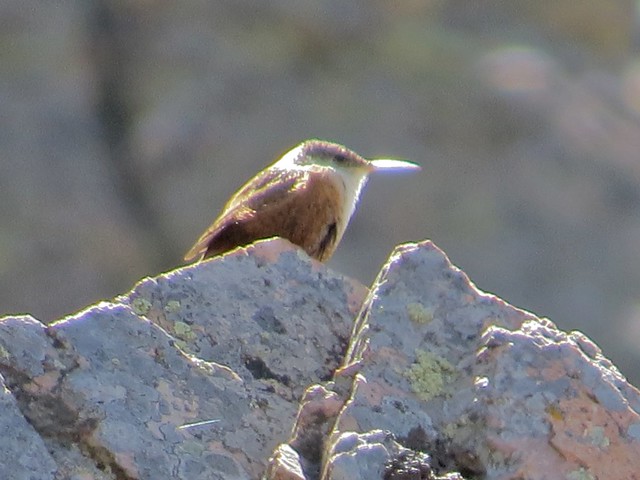
Canyon Wren at Madera Canyon in Santa Cruz County, AZ 01

I had 3-4 RED-FACED WARBLERS. One of them was flitting from branch to branch at eye level and flew past my head. I was surprised to find a VIRGINIA'S WARBLER at such a high altitude. This was another bird I had missed at Mt. Lemmon.
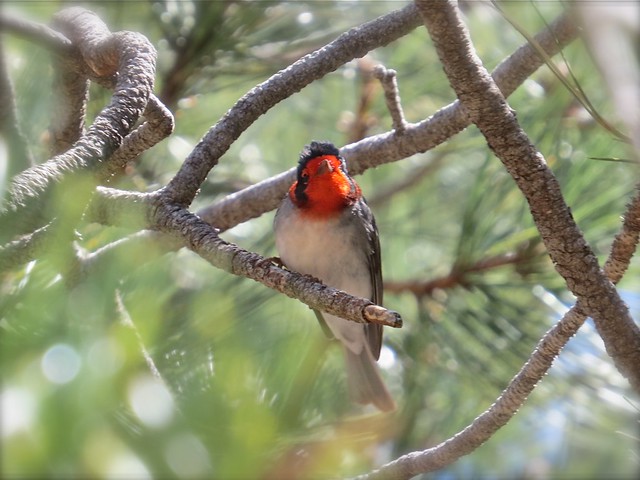
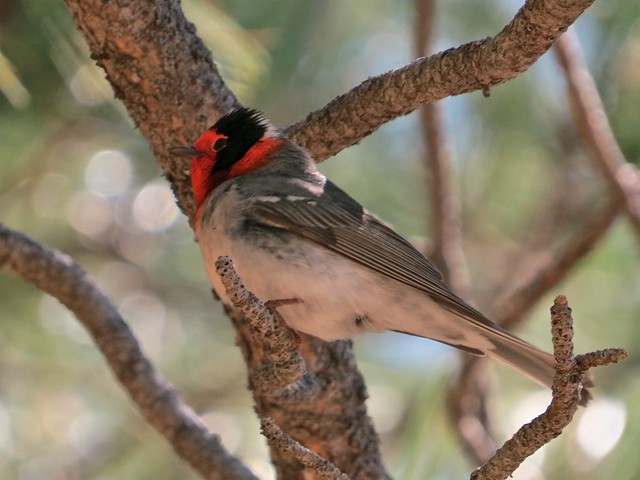
Red-faced Warbler at Madera Canyon in Santa Cruz County, AZ 01

Red-faced Warbler at Madera Canyon in Santa Cruz County, AZ 02

Other birds that I saw on the way to the top that I had not already seen further down were HAIRY WOODPECKER, TURKEY VULTURE, and WHITE-BREASTED NUTHATCH.
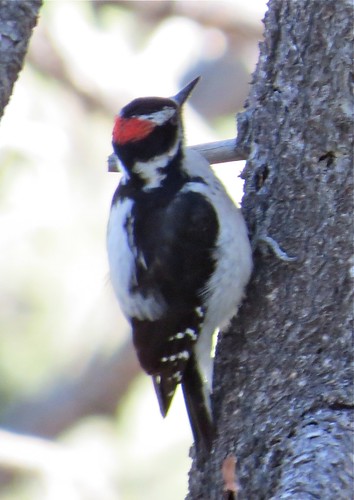
Hairy Woodpecker on the Old Baldy Trail at Madera Canyon in Santa Cruz County, Arizonad

However, the most interesting sighting of the day was not a bird, but a pack of Kawata Mundis, also known as White-nosed Coatis climbing near the top of Mt. Wrightson. We had not idea what they were when we first saw them, but some of the other hikers told us what they were when we described them. They are beautiful creatures, red like a fox, with long, ringed, bushy tails, and long striped snouts. They are related to Racoons.
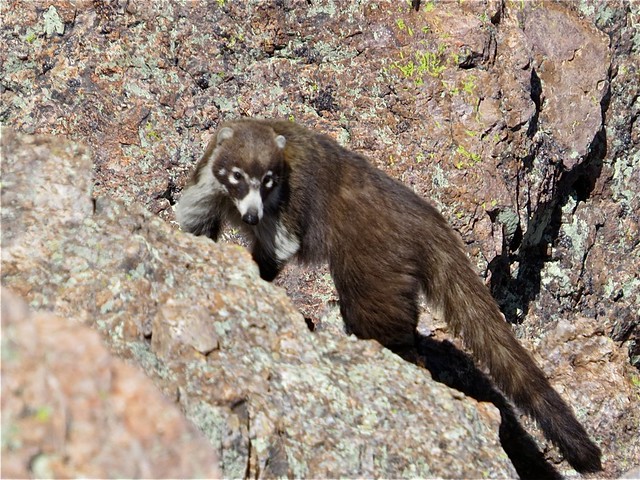
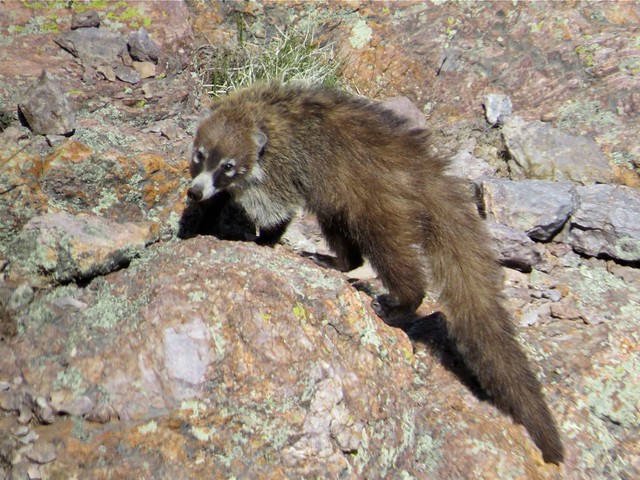
Coati Mundi (White-nosed Coati) on Mt. Wrightson in Madera Canyon in Santa Cruz County, AZ 01

Coati Mundi (White-nosed Coati) on Mt. Wrightson in Madera Canyon in Santa Cruz County, AZ 09

I became sick on the way down with nausea and leg cramps and received some much needed encouragement and assistance from a hiker named Steve Wamba, who carried my bag and camera and lent me one of his poles on the way down. By the time we got close to the bottom, I was feeling much better. My wife and mother-in-law were waiting for us at the bottom with Gatorade.
Monday, March 30, 2015

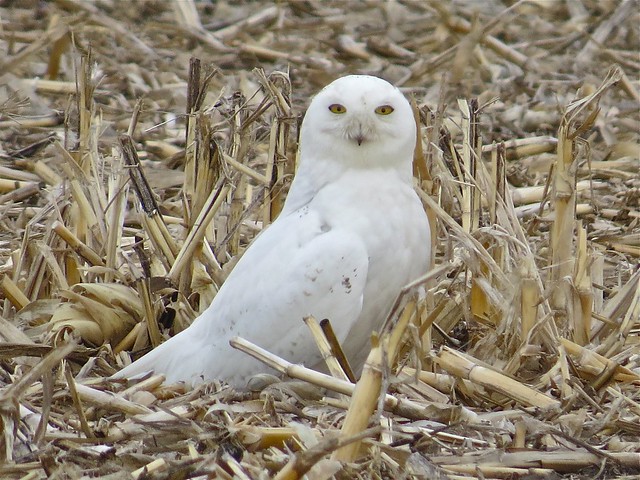
Adult Male Snowy Owl in Livingston County

Snowy Owl in Livingston County, IL 02

A coworker of mine found this bird near Salem Ranch (Flanagan) in Livingston County on Monday, March 30. I did not post because at the time, we thought the bird was sick or injured since it seemed immobile (5 yards from the road all day), and we were planning to capture the bird so that it could be helped. However, he seemed to have moved on by the next day. So hopefully, he is okay and on his way back to the Arctic to find a mate.

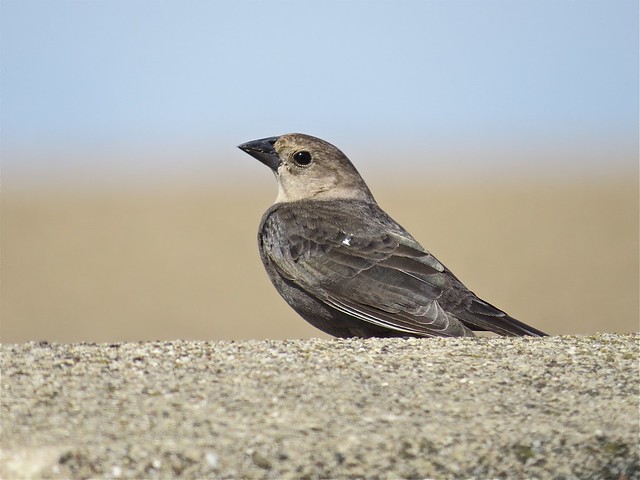
Here is a female Brown-headed Cowbird, I saw in the same area.

Brown-headed Cowbird in Livingston County, IL 01

Written and published on April 5, 2015.

Sunday, March 29, 2015

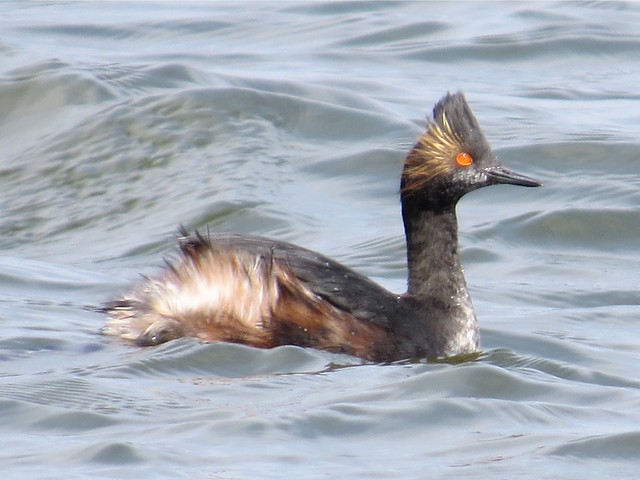
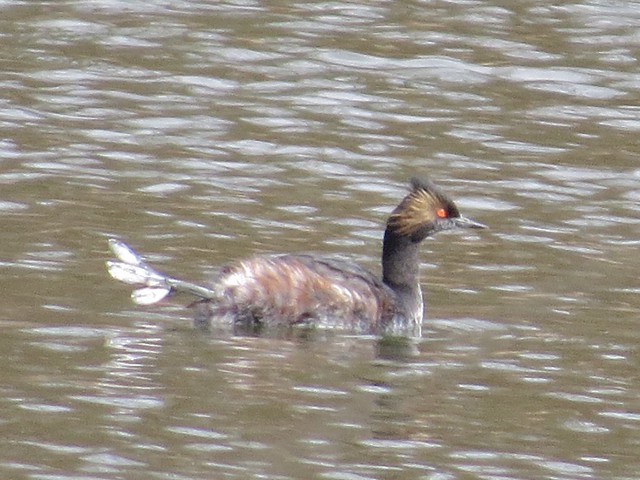
Eared Grebe at Evergreen Lake

Eared Grebe at Evergreen Lake in McLean and Woodford County 04

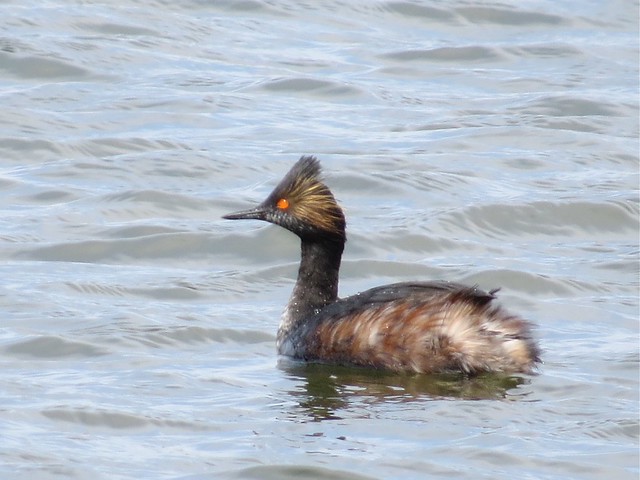
Here are a few photos of the Eared Grebe that Dave Weth found today at Evergreen Lake. My friends Justin Watford and Andrew Easling, who were visiting today, went with me to see it. When I photographed it, it was swimming back and forth across the county line between McLean and Woodford Counties. Eared Grebes are fairly rare to Illinois. I had seen one in Woodford County several years ago in 2010, but this was the first one I had ever seen in McLean County and the first I had ever seen in breeding plumage anywhere.

Eared Grebe at Evergreen Lake in McLean and Woodford County 05

Grebes' feet are obviously not designed for walking.

Eared Grebe at Evergreen Lake in McLean and Woodford County 07

Other birds at Evergreen Lake today included Horned Grebe, Pied-billed Grebe, Common Loon, Red-breasted Merganser, Common Merganser, Bufflehead, Lesser Scaup, Double-crested Cormorant, and American Coot. There were also a couple of American White Pelicans and a raft of Redheads and Ruddy Ducks at Lake Bloomington.

Saturday, March 28, 2015

Birds With Horns

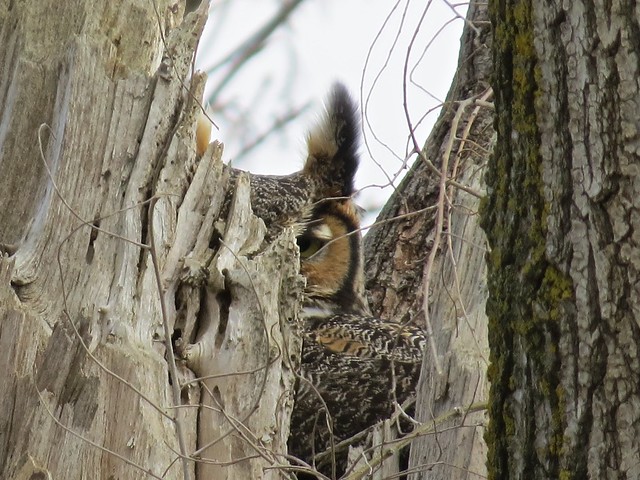
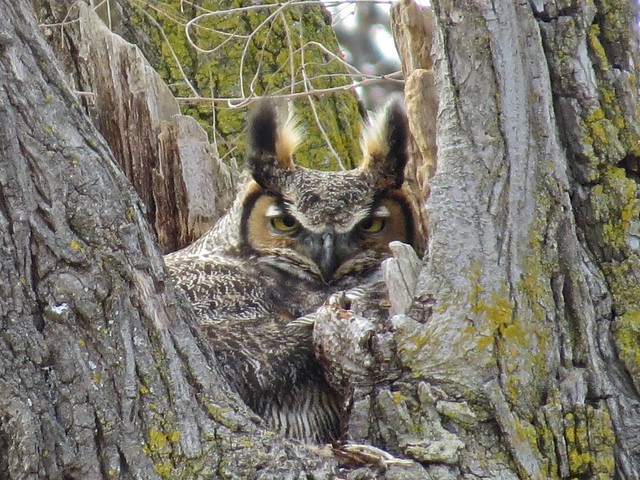
Great Horned Owl at Salem Ranch in Livingston County, IL 05

This week I saw three different bird species that are named after their "horns." On Thursday, I photographed this Great Horned Owl sitting on its nest at Salem Ranch in Flanagan, IL.

Great Horned Owl at Salem Ranch in Livingston County, IL 08

Great Horned Owl at Salem Ranch in Livingston County, IL 14

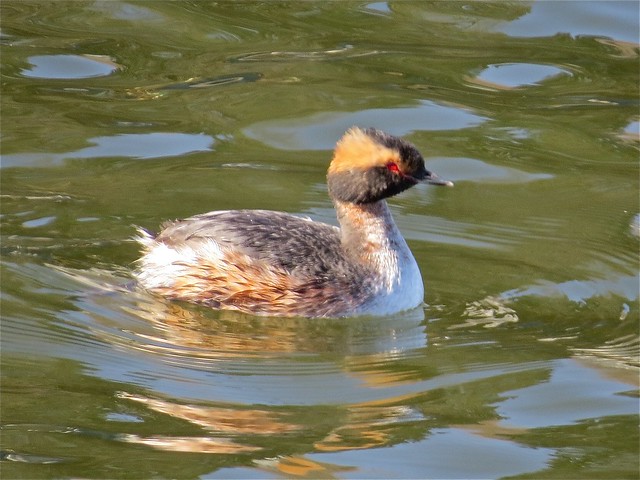
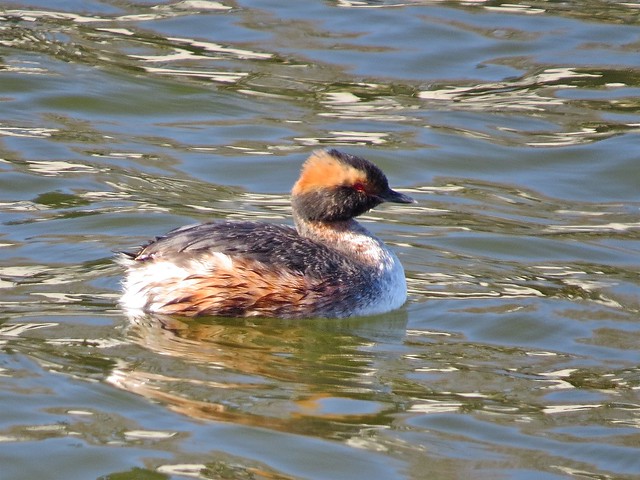
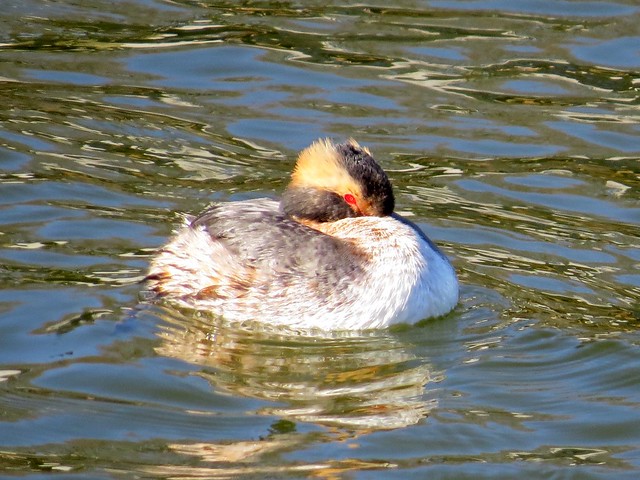
Then on Friday morning , I photographed this Horned Grebe at Lake Bloomington.

Horned Grebe at Lake Bloomington in McLean County, IL 01

Horned Grebe at Lake Bloomington in McLean County, IL 06

Horned Grebe at Lake Bloomington in McLean County, IL 14

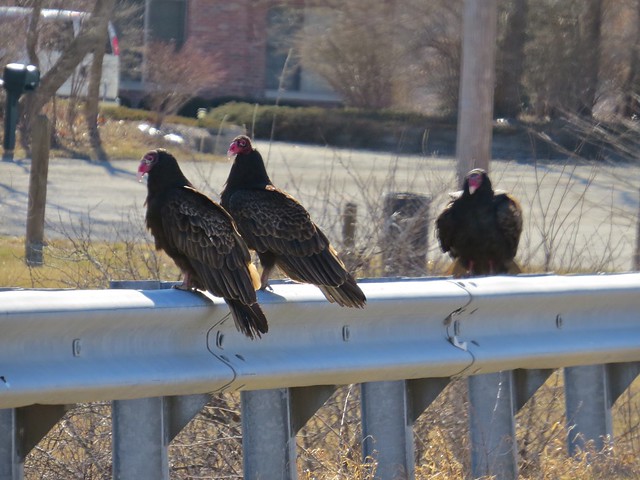
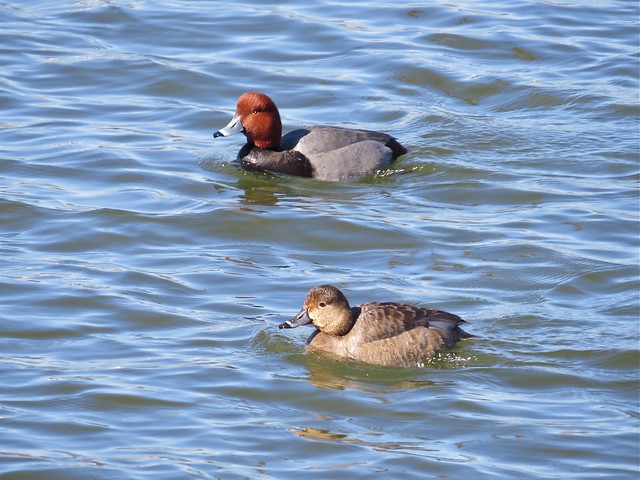
There were a few other birds near the grebe--Turkey Vultures and Redheads.

Turkey Vulture at Lake Bloomington in McLean County, IL

Redhead at Lake Bloomington in McLean County, IL 03

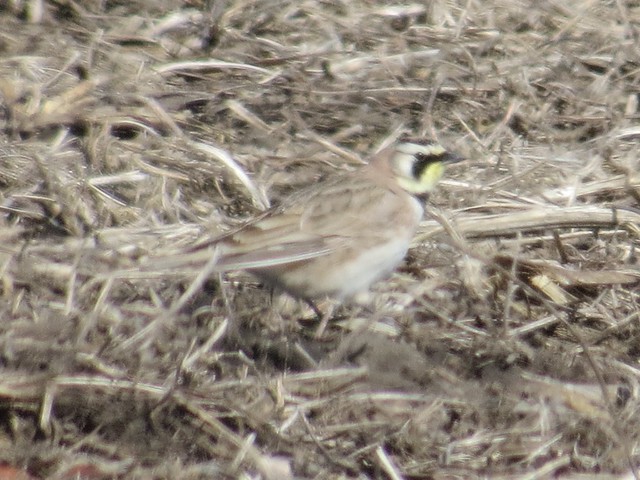
Then I saw this Horned Lark near Salem Ranch in Flanagan, IL. Unfortunately, the light haze prevented me from getting a clear shot.

Horned Lark near Salem Ranch in Livingston County, IL

So why do some birds have "horns?" They are not actually "horns" in the sense of being part of their skeletal structure. Nor are they ears as they are called on some other related birds such as the Long-eared Owl, or the Eared Grebe. The true ears of an owl are actually located on the sides of the head rather than the top. The so called "horns" or "ears" are actually tufts of feathers, which the birds can move. Owls can make these feather tufts stand straight up or pull them back so that they are barely visible.

So if they are not actually horns or ears, what function do these tufts of feathers have? There are several theories as to their purpose for owls, including non-vocal communication, identification, camouflage, and intimidation. Grebes only have "horns" or "ears" during the breeding season, which may indicate that in grebes, they may play a role in attracting a mate. As for Horned Larks, I do not know the purpose of their horns. Perhaps it is merely to reflect the artistry and glory of their Creator.

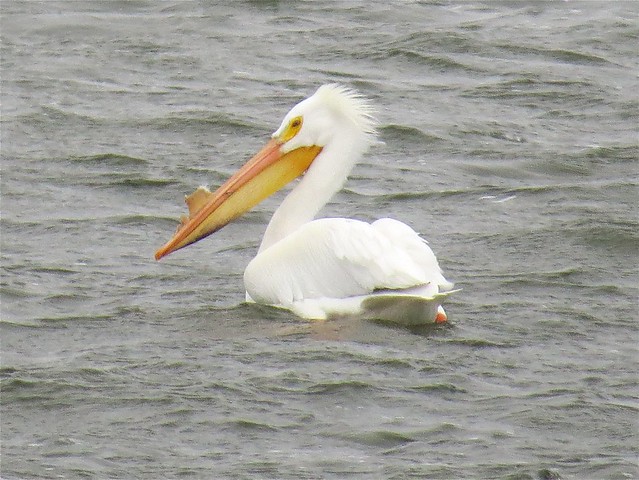
I do not know of any North American birds with true horns, but American White Pelicans have a protrusion on the top of their bills only during the breeding season. They shed these "plates" when the breeding season ends. In this photo the protrusion is not as round in shape as it normally is on these birds. I photographed this pelican at Lake Bloomington on March 24.

American White Pelican at Lake Bloomington in McLean County, IL